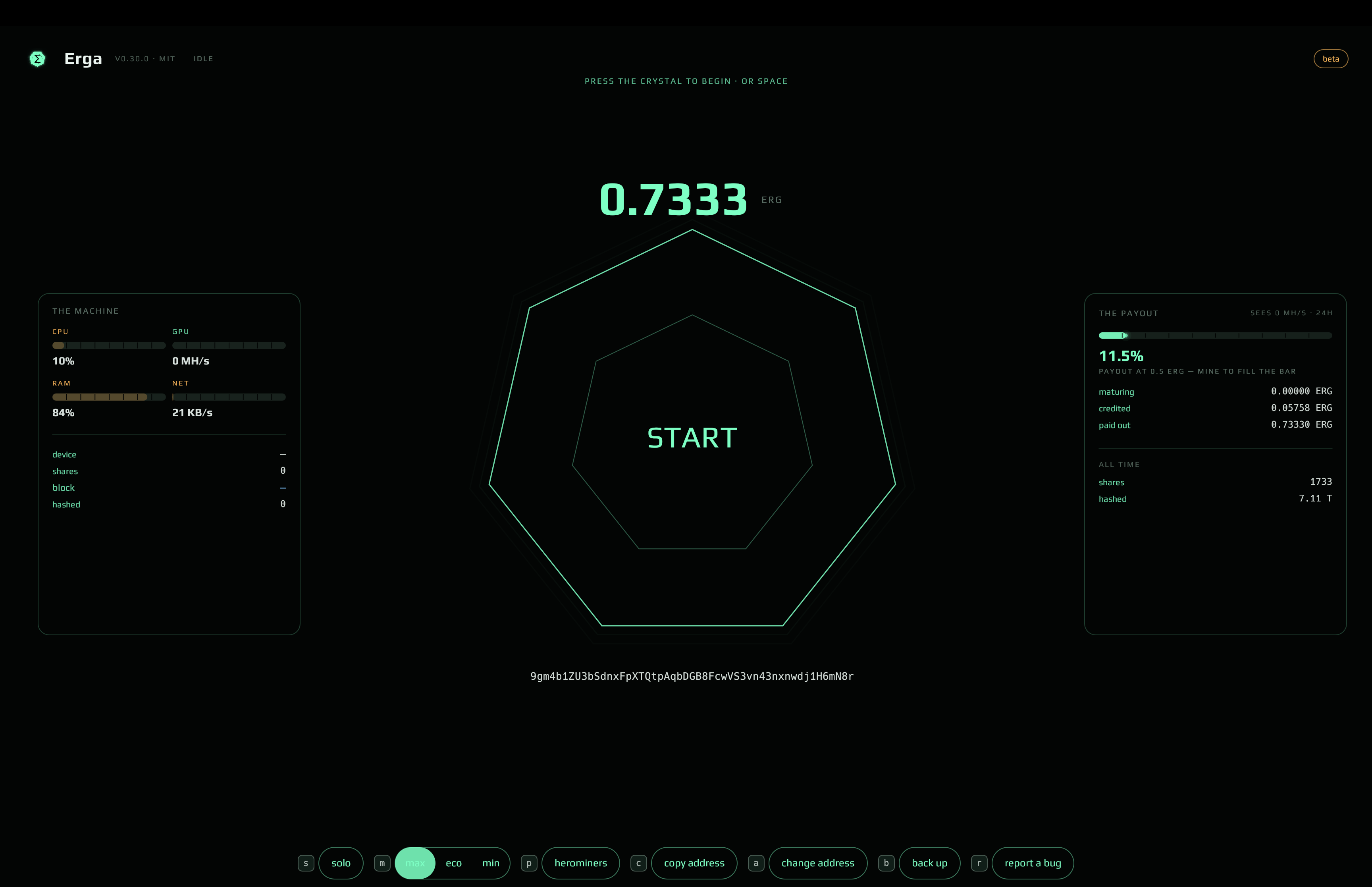
I was in search for intersting application of the apple drivers i developed recently. Key feature is zero copy memory, so yep you can access common memory simultanisouly from GPU (metal), CPU and even neural engine.
That is how i came to Ergo miner. Its apperantly 2 times energy efficient on autolycos than top green cards.
Enjoy Erga
1 Like
I was able to mine in serveral days.
The thing is trully usable and reliable to spread ergo ecosystem for all mac user worldwide
1 Like
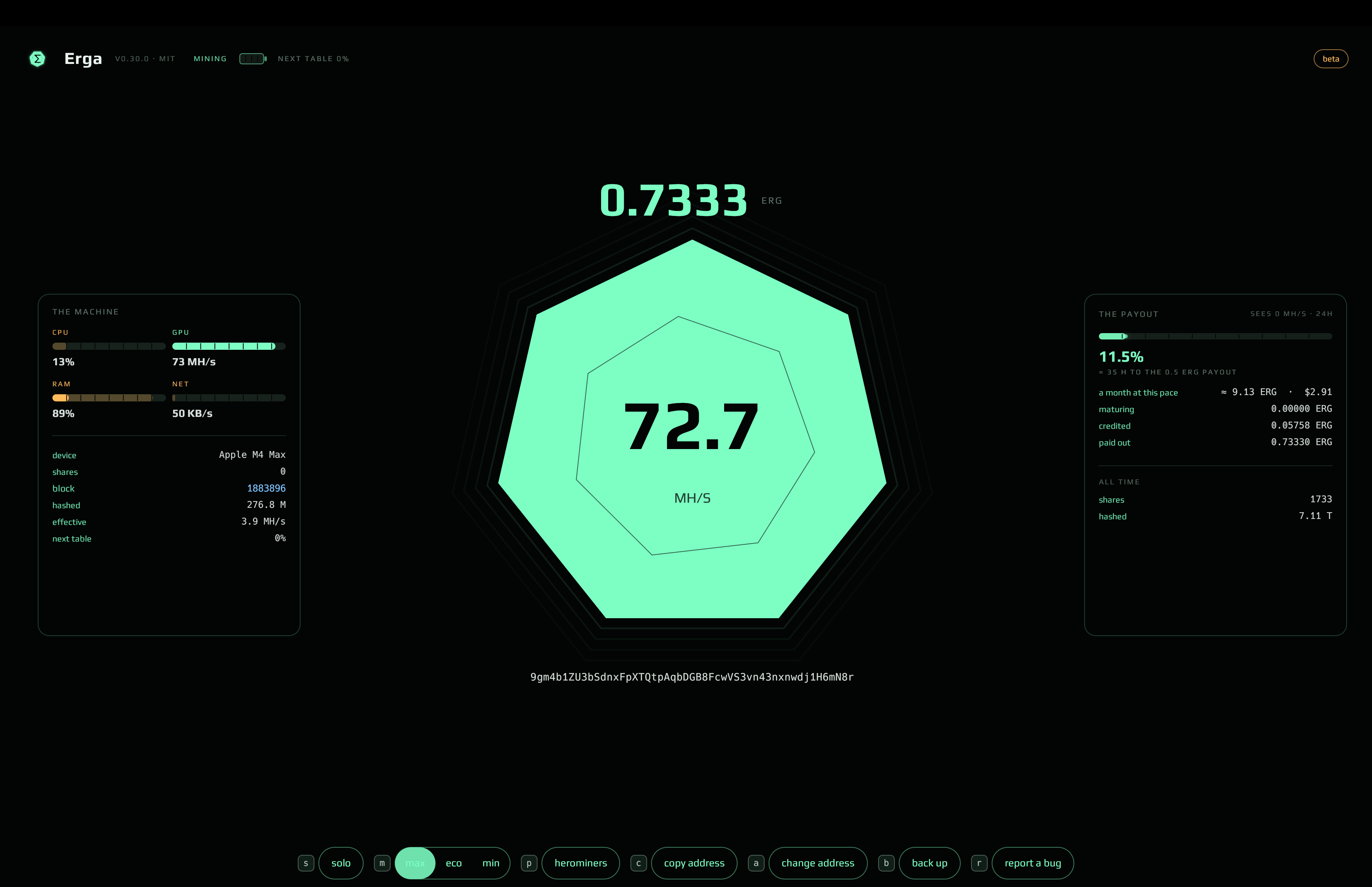
After building the tables miners starts to do the job
This is hashrate on Macbook Pro M4 Max with 48 GB
INSTALL
1 Like
How long does it take to regen the table?
I tried to optimize as much as possible and do it in async fashion. so on my machine it takes around 10 seconds
Ten seconds for the regen sounds reasonable for an async approach, and doing it in the background is the right call so it doesn’t block the main work. Does that time scale with the table size, or is it mostly fixed overhead on Apple Silicon? Curious whether caching parts of it between runs would help. Either way, keeping the miner energy-efficient is the more interesting goal to me than raw speed.
The zero-copy memory point is the interesting part here—sharing buffers across Metal, CPU, and the Neural Engine without duplication is what makes the efficiency angle plausible, not just the hashrate numbers. I’m curious how the M4 Max figures hold up once the GPU is also doing normal desktop work, since shared memory can get contended fast. Also, what’s the actual wattage you’re seeing versus an equivalent green card, rather than just the per-hash comparison? Those details would tell a clearer story to Mac users who’d otherwise dismiss mining outright.
The shared memory contention point matters more than the hashrate numbers, especially on a machine that’s also driving a display and running background apps. I’d want to see wattage measured at the wall during sustained mining with normal desktop use mixed in, not just an idle-baseline comparison against a dedicated card. On the regen time — if it scales with table size, caching between runs seems worth testing; if it’s fixed overhead, there’s less to gain. Either way the efficiency framing is what makes this credible to people who’d otherwise tune out.